Balancing WA State Budget Without Increasing Taxes: A Common-Sense Approach to Fiscal Responsibility
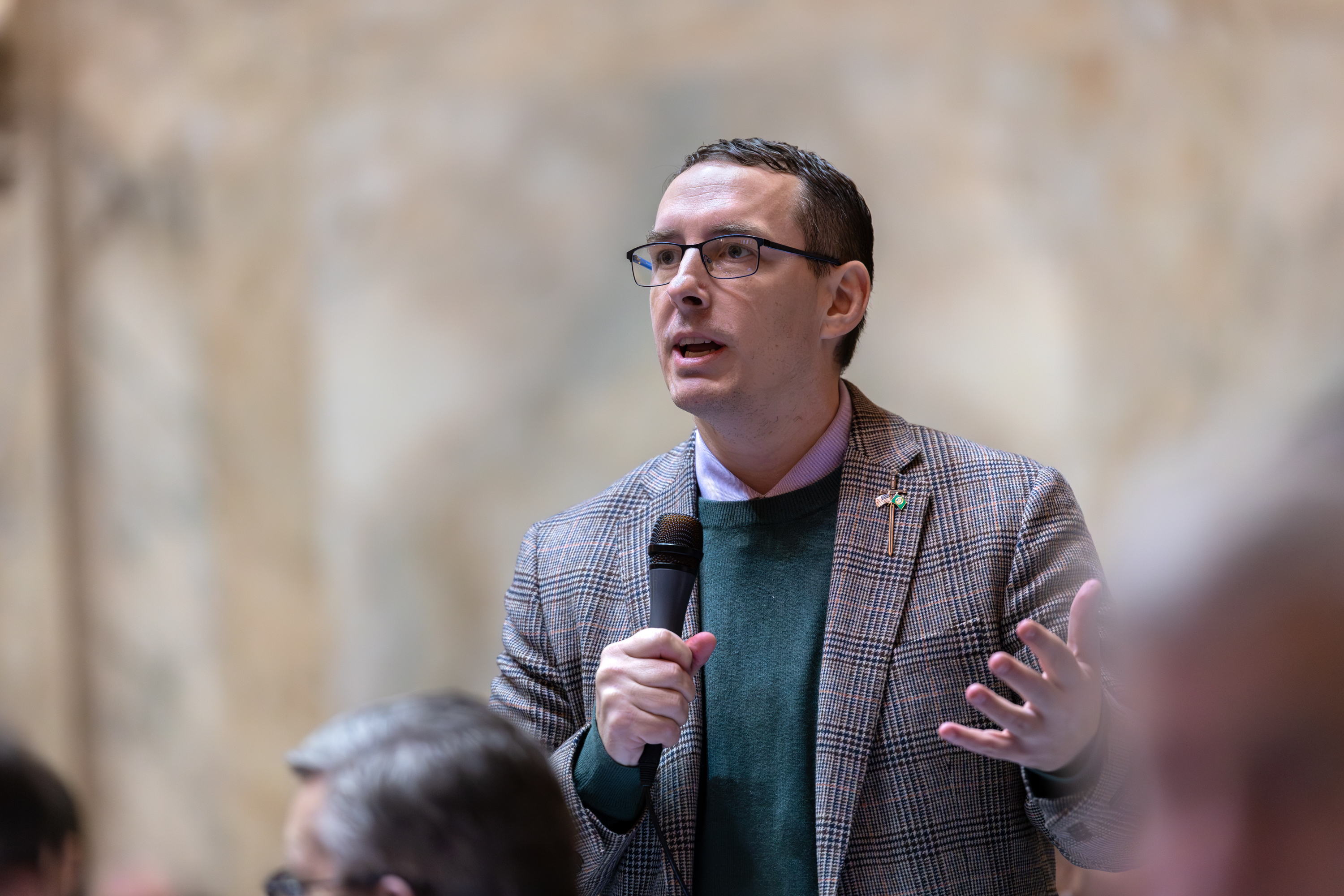
“In a healthy household or a successful business, a doubling of expenses would require a doubling of value. In state government, it has only bought us longer lines, worse outcomes, and more finger-pointing.”
Washington state has a math problem. It is not a lack of revenue; it is a total lack of adult supervision.
Over the last decade, the state budget has exploded by nearly double, climbing to historic, dizzying heights. If you walk into any grocery store in Pierce County, fill up your tank at a gas station in Yakima, or try to board a delayed ferry in Anacortes, you already know the truth. You are paying more than ever, and you are getting less for it.
This is the Results Gap. It is the distance between the massive amount of tax dollars sent to Olympia and the broken public services delivered back to our communities. In a healthy household or a successful business, a doubling of expenses would require a doubling of value. In state government, it has only bought us longer lines, worse outcomes, and more finger-pointing.
The reality is that Washington is a high-tax state delivering low-quality services. We do not have a revenue crisis; we have a prioritization crisis. Balancing WA state budget without increasing taxes is not just possible, it is the only responsible path forward for our families and our future.
The 35-Year Monopoly and the Inevitable Bloat
To understand how we got here, we have to look at the machinery of power in our state. For over 35 years, a single majority party has controlled the Governor’s mansion and the legislative agenda. When one group holds the keys to the castle for three and a half decades, they stop viewing tax dollars as a sacred trust. Instead, they begin to view your hard-earned money as an infinite credit card with no limit and no expiration date.
During this 35-year run, the state government has grown into an unaccountable behemoth. Every time a new societal problem arises, the default response from Olympia is to throw more money at it, create a new agency, hire more middle managers, and hope for the best.
But money does not equal outcomes.
We have spent billions of dollars on homelessness, yet the tents remain on our sidewalks. We have poured massive resources into our transport systems, yet our roads are crumbling and our ferry system is in a state of near-collapse. The majority party’s solution is always the same: ask for just a little bit more from your paycheck, your business, and your family budget.
But here is the part that should worry us: this insatiable spending has created a fragile economic house of cards. By relying on continuous tax hikes rather than disciplined prioritization, Olympia has built a bloated budget that is completely unprepared for any economic downturn.
The Human Cost of Olympia’s Spending Spree
While state agencies grow their headcounts, working families are forced to shrink their expectations. When a mom and dad sit down at the kitchen table in Orting or Spokane to look at their monthly bills, they do not get to invent new revenue streams out of thin air. They cannot levy a new tax on their neighbors to cover the rising cost of groceries, utility bills, and childcare. They have to make hard choices. They cut back, they prioritize, and they live within their means.
Struggling small business owners face the same harsh reality. From the family farms in the Yakima Valley to the tech startups in Bellevue, local employers are crawling out of their skin trying to keep up with skyrocketing state-imposed costs. We have seen business owners balancing budgets on the backs of their own families, working eighty-hour weeks just to keep the lights on and keep their employees paid.
When the state government adds new taxes, it is not just taxing a balance sheet; it is taxing the future of our communities. It is taxing the young family who can no longer afford to buy their first home. It is taxing the high school graduate who realizes they have to leave the state just to find an affordable place to live.
The reality is that we cannot tax our way to prosperity. We must manage what we already have.
A Technologist and Veteran’s Blueprint for Fiscal Sanity
As a technologist, a dad, and a Veteran, I look at the state budget through a different lens than the lifetime politicians in Olympia. In the technology sector, if your product is failing and your costs are doubling, you do not ask your customers to pay twice as much for a broken system. You audit your code, you streamline your operations, you focus on your core mission, and you fix the bugs.
We can do the exact same thing in state government. We can fix this by bringing adult leadership to the table and adopting a maintenance-first, results-driven approach to our state finances.
Here is how we balance the Washington state budget without asking taxpayers for another dime:
Shifting from Risk Mitigation to Leadership
In my time as a local mayor, I learned a valuable lesson about the public sector: government is naturally designed to avoid risk at all costs. This risk-mitigation mindset is why projects take five times longer than they should and cost twice as much as they should. The fear of a lawsuit or a bad headline often paralyzes decision-makers, leading to endless studies, consultants, and committees that consume millions of taxpayer dollars without ever laying a single brick or helping a single family.
But leadership is not about avoiding risk; it is about managing it to deliver results.
When we faced severe flood risks in Orting, we did not just sit on our hands or ask for a massive tax hike to build more concrete walls. We worked together to build a nationally recognized setback levee system. We partnered with the county, the state, and the community to get to "yes" on a common-sense solution that allowed the river to channel naturally. It was expensive, but it was a targeted, one-time investment that protected our entire community without punishing our local taxpayers.
We need that exact same results-oriented leadership in Olympia. We need to stop the finger-pointing, step away from the partisan battle lines, and focus on the mechanics of good governance.
Protecting the Future of Washington
The human capital cost of our current path is devastating. People are voting with their feet. When I speak to community groups across the state, I often ask how many people know someone who has moved or is actively considering moving out of Washington. Almost every hand in the room goes up.
This capital flight is real. It is not just the ultra-wealthy who are packing their bags and heading to states with more friendly tax climates. It is the young families, the skilled tradespeople, the entrepreneurs, and the retirees who love the natural beauty of our state but simply can no longer afford to live here.
We cannot afford to lose our human capital. The potential of Washington is limitless, but our current performance is unacceptable. We deserve a state government that is as innovative, resilient, and hardworking as the people who live here.
We can balance this budget. We can fund our schools, secure our neighborhoods, and rebuild our infrastructure without raising taxes. All it takes is the political courage to say "no" to special interests and "yes" to fiscal discipline.
I am committed to fighting for a budget that respects your hard-earned money and delivers the high-quality services you pay for. Let’s bring common sense back to Olympia and build a sustainable future for all of Washington.
Related Media:
Join The Fight For Accountability
Help us hold the line against bad policy and runaway spending.